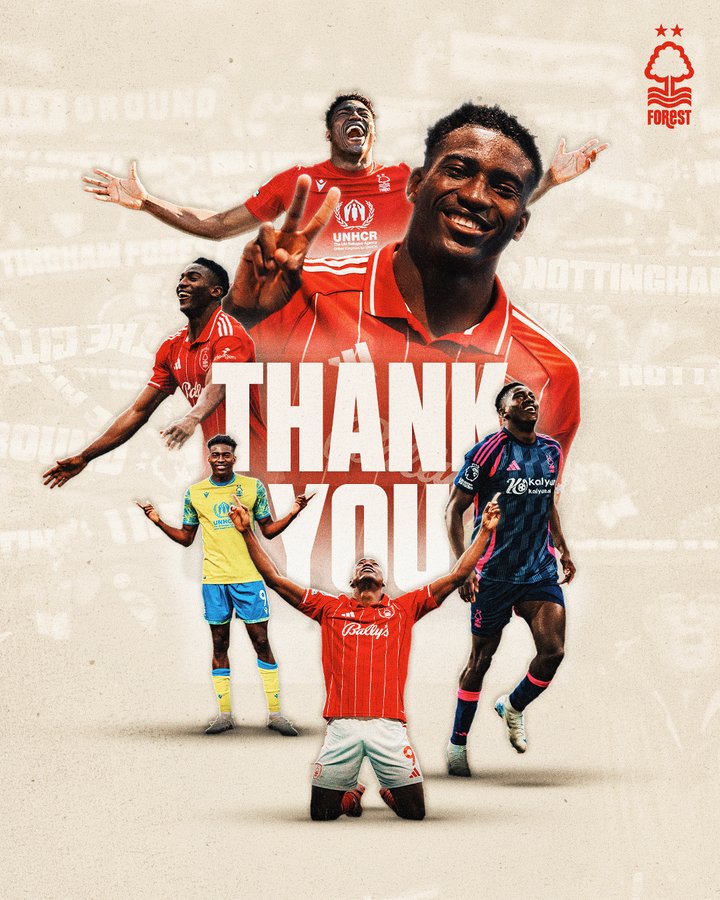
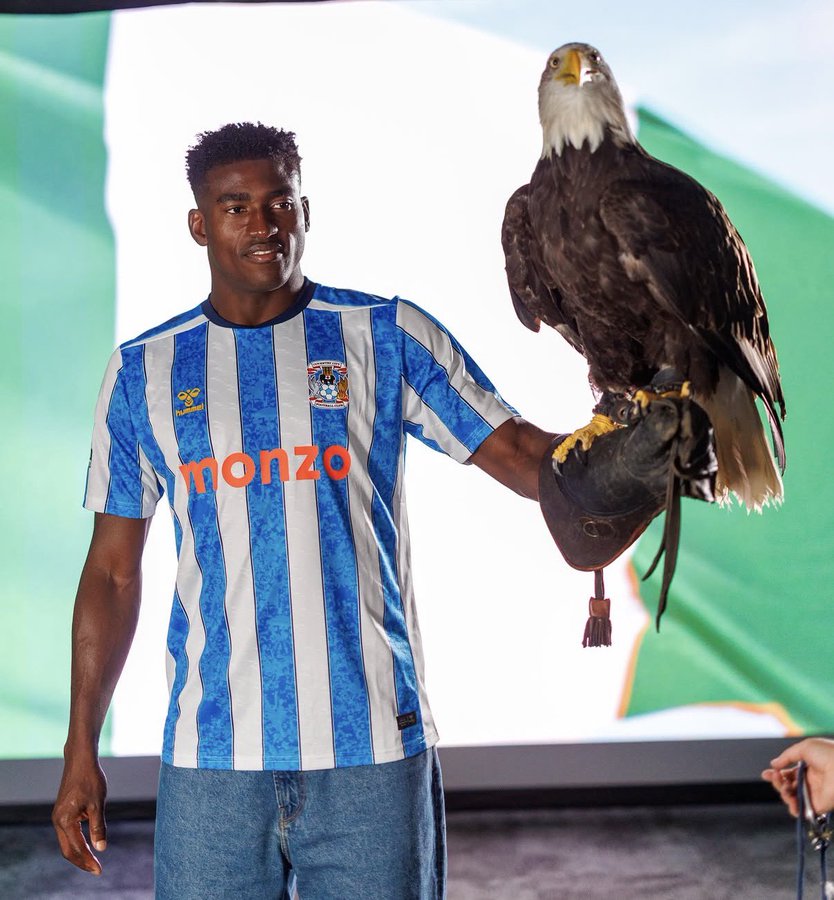
Sometimes, the clearest measure of a person’s professional reputation is not found in what they achieved while they were around, but in what people say about them when they leave. Transfers happen every day in football. Players move from one club to another, managers come and go, and careers take new directions. Yet, occasionally, a departure reveals something far more valuable than statistics. Taiwo Awoniyi’s move from Nottingham Forest to newly promoted Coventry City has offered one of those moments.
The Nigerian striker’s transfer has naturally generated conversations about football. After all, Awoniyi has played at the highest level in England and brings experience, physicality and a proven understanding of the demands of Premier League football to his new club. But beyond the goals, the injuries, the performances and the transfer fee, something else has stood out in the conversations surrounding his departure: the character of the man behind the footballer.
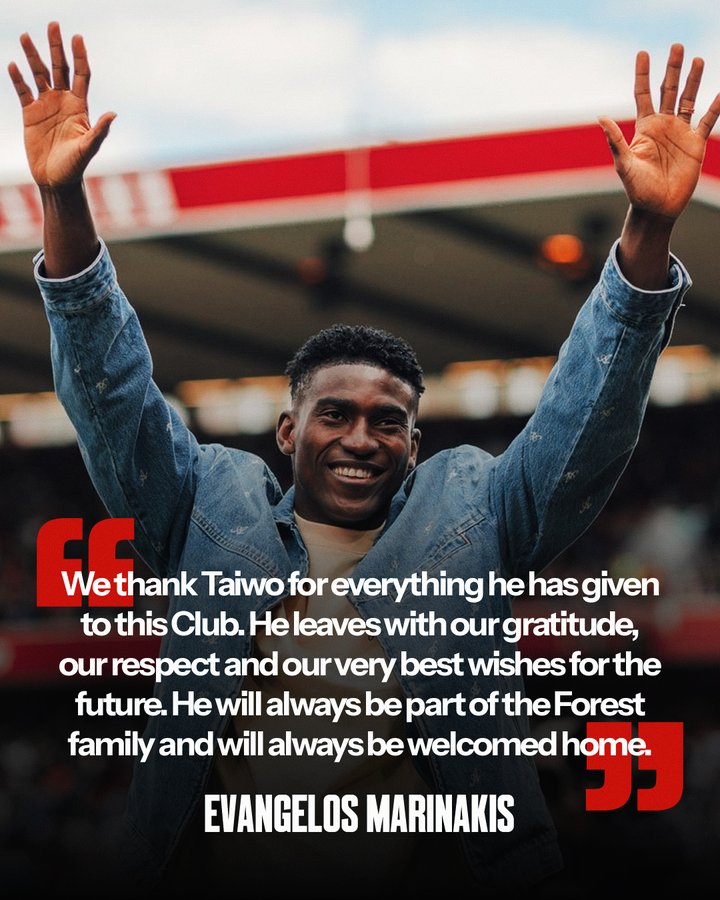
Nottingham Forest owner Evangelos Marinakis’ farewell message was particularly telling. He said, “We thank Taiwo for everything he has given to this Club. He leaves with our gratitude, our respect and our very best wishes for the future. He will always be part of the Forest family and will always be welcomed home.”
Those words deserve some attention. In professional football, relationships can sometimes appear temporary and transactional. Players arrive, players leave, and the business of football moves on. For a club owner to speak publicly about gratitude, respect and a player’s continuing place within the Forest family suggests that Awoniyi’s contribution went beyond what could be measured on a football pitch.
Then came the account of Nigerian sports journalist Ojora Babatunde, which offered an even more revealing glimpse into the person behind the public figure. He spoke about Awoniyi buying cars for some of his grassroots coaches and asking them not to disclose that he was responsible. He recalled how the footballer sponsored people he grew up with to visit the United Kingdom, covering their expenses while they were there. He also highlighted Awoniyi’s support for the Kwara Kiddies League, including jerseys for participating teams, player meals and Player of the Match awards.
Perhaps even more revealing was the consistency of that support. According to Babatunde, Awoniyi would call or send a message months before his events and simply say, “Egbon, make we support your event na.” There was no elaborate campaign around it, no demand for public recognition and apparently no need for anyone to know that he was behind the support. It was simply a willingness to show up for people. And that, for me, is where the bigger story begins.
We spend a great deal of time teaching young people how to become successful. We tell them to develop their talent, work hard, build connections, pursue opportunities and make something meaningful of their lives. For athletes, we emphasise discipline, fitness, technique, performance and winning. All of these things matter. But there is another question that deserves just as much attention: What kind of person are you becoming while you pursue success?
Because professional excellence is not only about what you can do. It is also about what your presence does to the people around you.
You can be exceptionally talented and still be difficult to work with. You can be the highest-paid person in an organisation and still leave people feeling small. You can win trophies, accumulate wealth and become famous, yet have very little positive influence on the people whose lives intersect with yours.
The better possibility is to become excellent without losing your humanity.
That means remembering the people who supported you before the world knew your name. It means being generous when you have the capacity to give. It means encouraging the person who is still trying to find their feet. It means supporting another person’s dream without feeling that their success diminishes yours. Sometimes, it means helping quietly, without needing your name attached to everything you do.
Awoniyi’s story is a useful reminder that character is not something we announce about ourselves; it is something other people eventually testify to.
That is why the reactions to his departure from Nottingham Forest are worth paying attention to. His former club speaks about gratitude and respect. Someone who has followed his journey speaks about his generosity and consistent support for people around him. These accounts may not appear on a football statistics page, but they tell us something about the kind of professional he has been. And this matters, especially for young footballers watching his journey.
Talent may get you noticed. Performance may earn you a contract. Hard work may take you to places you once only imagined. But character determines what happens to your reputation when the applause becomes quieter.
It is easy to be respectful when you need something from someone. The real test is how you treat people when you have nothing to gain from them. It is easy to celebrate your own success. A greater measure of character is whether you can use that success to lift someone else.
This lesson, of course, extends far beyond football. Every professional will eventually leave somewhere. You may leave a company, change careers, move to another organisation or step away from a position that once defined you. When that happens, your title will stay behind. Your office will belong to someone else. Your designation will eventually disappear from the organisational chart.
But your reputation will travel with you. People will remember how you treated them. They will remember whether you encouraged or discouraged them, whether you made their work easier or more difficult, whether you showed up when they needed support, and whether your success made you more human or simply more important.
That is why Taiwo Awoniyi’s story is worth celebrating beyond football. He is still writing his football story, and Coventry City will rightly judge him by what he contributes on the pitch. But the accounts surrounding his departure from Nottingham Forest remind us that there is another scoreboard that matters — the one that measures the lives we have touched and the people who can genuinely say that knowing us made a difference.
For the younger generation, that may be the most important lesson of all: don’t only work on your talent; work on your character. Be good at what you do. Pursue excellence. Dream boldly. But while climbing, remember the people around you. Do not become so focused on reaching the top that you forget to help someone else along the way.
Talent may introduce you to the world, but character decides how the world remembers you. And perhaps, in the end, that is the greater achievement: not simply becoming someone people know, but becoming someone people are grateful to have known.