By Adeniran Bamisaye
What does it mean to build a police institution that its officers can be proud to serve?
The answer cannot lie only in better operations, improved crime-fighting capacity or stricter discipline. It must also be found in how an institution treats the men and women who carry its responsibilities every day—particularly when they are tired, vulnerable or, in the worst circumstances, no longer there to serve.
This is what makes some of the recent interventions under Inspector-General of Police, IGP Olatunji Rilwan Disu, worth looking at beyond the immediate headlines.
The IGP’s recent inspection of police barracks and housing projects across Lagos, for instance, was not merely an infrastructure tour. About 23 projects at various stages of development were inspected, including facilities that had become so dilapidated that they had to be pulled down for redevelopment.
Importantly, Disu did not present the situation as satisfactory. He acknowledged that he was not happy with the pace of development and recognised the frustration of officers who, in his words, “our men have been patient enough for a lot of times.”
That acknowledgement matters.

Police officers are expected to confront difficult and often dangerous situations in the course of protecting lives and property. But they are also human beings who need a decent place to return to, rest and prepare for the next day’s duty. Their families need the same sense of dignity and security.
In that context, accommodation is not simply a welfare perk. It is part of the infrastructure of policing.
The same principle applies to what happens when an officer does not return home.
The recent disbursement of more than ₦2.3 billion in insurance and welfare benefits to 2,971 beneficiaries and next-of-kin of officers who died in service is significant for precisely this reason. No financial payment can restore a husband, wife, father or mother to a grieving family. It cannot undo the circumstances of a death or compensate fully for a life lost in the service of the nation.
But it can provide some measure of succour.

For a family suddenly deprived of a breadwinner, financial assistance can mean school fees can be paid, immediate household needs can be met and a widow or dependent can face the difficult days ahead with slightly less uncertainty. It is not a replacement for the person lost; it is an acknowledgement that the family should not have to bear both the emotional and financial consequences of that loss alone.
And there is a wider message for those still wearing the uniform: the institution remembers.
That message can have consequences for morale.
The return to Ago-Iwoye, Ogun State, where Disu once served as a Divisional Police Officer, offers another dimension to the same conversation. It was a reminder of the journey from ordinary police postings to the highest professional office in the Force—and of the fact that institutional leadership is ultimately connected to the experiences of officers at the operational end of policing.
For younger officers, such examples matter.
They observe not just what their leaders demand from them, but what their leaders are prepared to do for the institution and its people. They notice whether the welfare of junior personnel is taken seriously, whether the families of fallen colleagues are remembered and whether the places in which officers live are considered worthy of attention.
That can shape how a new generation understands its relationship with the institution.
People are generally more willing to give themselves to an organisation when they believe the organisation also values them. And for a police officer whose profession demands unusual levels of sacrifice, that sense of reciprocity is particularly important.
This is where the significance of the current efforts extends beyond the personality of the IGP.
Disu deserves recognition for the will to confront some of these issues and for taking steps that place personnel welfare within the broader conversation about police effectiveness. But ultimately, the objective should be bigger than the tenure or personality of any Inspector-General.
The real measure of progress will be whether these interventions become institutional culture rather than individual initiatives.
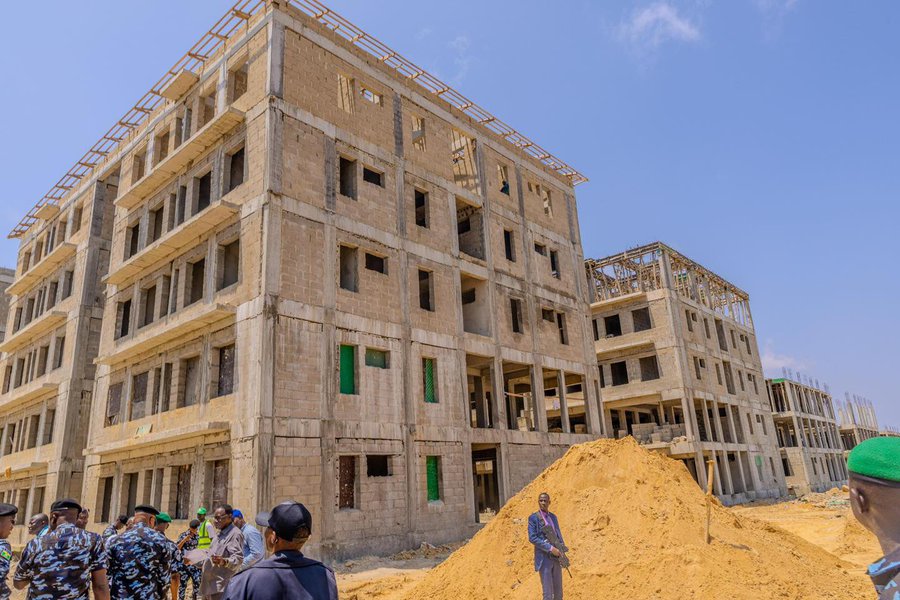
Will police housing projects be completed and maintained? Will decent accommodation become increasingly accessible to junior officers? Will welfare and insurance benefits reach families promptly and predictably? Will an officer’s wellbeing become as embedded in police administration as operational readiness?
Those are the questions that will determine whether today’s interventions become tomorrow’s institutional legacy.
The Nigeria Police Force, like any major institution, still has significant challenges to confront. Better housing does not eliminate the need for professional reform. Welfare cannot replace accountability. Financial assistance to bereaved families cannot erase the risks inherent in police work. And one administration cannot resolve every structural weakness overnight.
But institutions are built incrementally, through choices that tell their people what the organisation values.
A police officer who feels that the institution cares about where he lives, how his family is treated and what happens to his loved ones if he falls in service is likely to develop a stronger sense of ownership of that institution.
That is ultimately the larger objective.
A strong police force should not only be one that society can rely upon for protection. It should also be one in which the people providing that protection can say they are valued, supported and treated with dignity.
Those who protect society deserve to feel protected by the institution they serve. And when that principle becomes embedded in the institution itself, the result is not merely better welfare—it is a stronger, more committed and more sustainable police force.
Adeniran Bamisaye wrote in from Lagos, Nigeria