…Focus on cybercrime, terrorism, financial crime, intelligence sharing
The Inspector-General of Police, IGP Olatunji Rilwan Disu, has held high-level discussions with the Secretary General of the International Criminal Police Organisation (INTERPOL), Mr Valdecy Urquiza, in Lyon, France, as Nigeria moves to strengthen international cooperation against transnational crime.
The meeting formed part of Disu’s maiden official visit as Inspector-General of Police to the INTERPOL General Secretariat and focused on strengthening collaboration in areas including cybercrime, counter-terrorism, financial crime, organised crime, fugitive tracking and intelligence sharing.
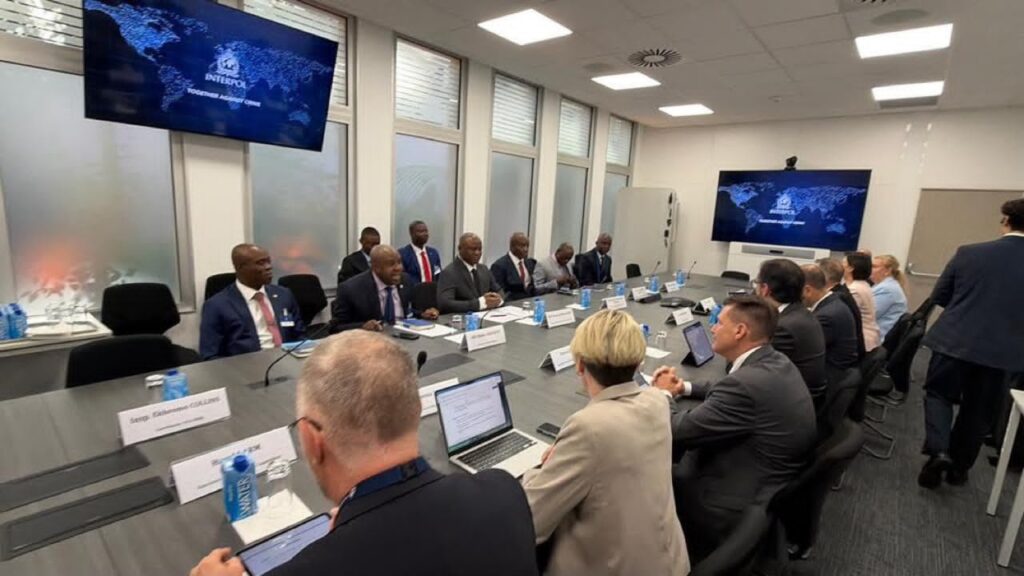
The discussions also examined the effective use of INTERPOL databases and policing tools to support investigations and improve the ability of Nigerian law enforcement authorities to track criminal networks operating across jurisdictions.
The engagement comes at a time when the nature of organised crime is becoming increasingly transnational. INTERPOL describes Nigeria as a key player in regional security and notes that the country’s geographical position and international connectivity expose it to interconnected threats including terrorism, cybercrime, financial fraud, human trafficking, drug trafficking, kidnapping and the proliferation of small arms.
For Nigeria, this makes international police cooperation more than a diplomatic engagement. INTERPOL’s National Central Bureau in Abuja, which operates within the Nigeria Police Force, serves as the country’s principal link to the organisation’s global police network, facilitating criminal intelligence sharing, international investigations and access to INTERPOL databases and notices.
Cybercrime was among the key areas discussed, reflecting the growing sophistication of criminal networks operating in the digital space. INTERPOL’s 2026 African Cyberthreat Assessment found that artificial intelligence was linked to 55 per cent of reported cybercrime across Africa, while warning that criminal activity is becoming increasingly industrialised and borderless.
The organisation has also warned of the growing convergence between financial fraud, cybercrime and organised crime, with criminal networks increasingly collaborating across jurisdictions and using technology to scale their operations.
Nigeria has itself been involved in INTERPOL-supported operations targeting cybercrime and organised criminal networks. In a recent Africa-wide cybercrime operation, Nigerian authorities dismantled a cybercrime syndicate involved in infiltrating the internal platform of a major telecommunications provider, while INTERPOL-supported operations have facilitated intelligence sharing and coordinated action across multiple countries.
Beyond cybercrime, the Lyon meeting provides an opportunity for Nigeria to strengthen cooperation in tracking fugitives, disrupting organised criminal networks and improving the flow of actionable intelligence between Nigerian law enforcement agencies and their international counterparts.
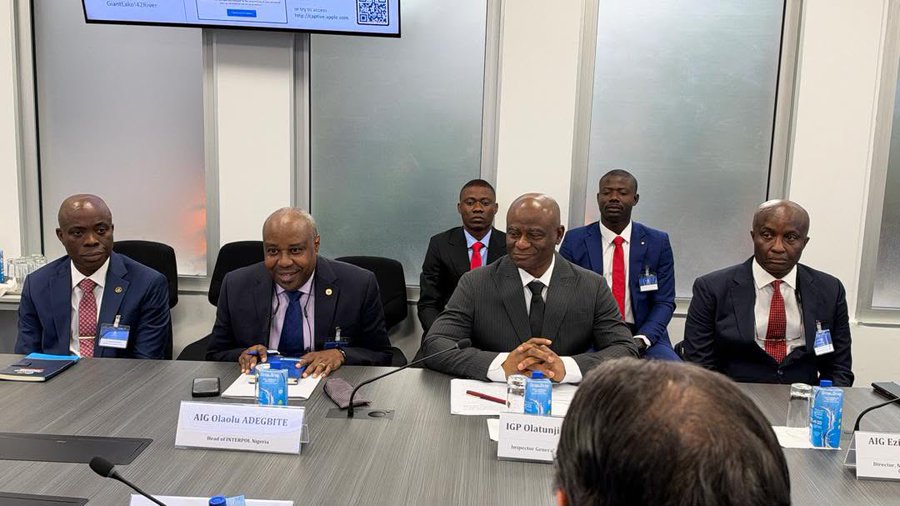
The IGP was accompanied by AIG Olaolu Adegbite, Head of INTERPOL Nigeria and the National Central Bureau, Abuja; AIG Ezima Akaninyene Ifem, Director of the Nigeria Police Force National Cybercrime Centre; AIG Akoh Benedict Gabriel, Head of the Nigeria Police Counter Terrorism Unit; and CP Ojajuni Olubode, INTERPOL Africa Committee Member.
The engagement underscores the growing importance of international cooperation in modern policing. As criminal networks increasingly move money, people, data and illicit activities across borders, law enforcement agencies must be able to operate with the same level of coordination.
For the Nigeria Police Force, the objective is therefore not simply to share information, but to turn international intelligence and partnerships into stronger investigations, faster responses and more effective disruption of criminal networks.
The meeting in Lyon signals another step in Nigeria’s efforts to strengthen its place within the global law enforcement architecture and build the partnerships required to confront crimes that no longer stop at national borders.